City profile
Denver, Colorado sits at the base of the Rocky Mountains, where geography, growth, and economic activity shape both opportunity and challenge. As one of the fastest growing metropolitan areas in the United States, with around 715,000 residents, Denver has become a regional hub for transportation, energy, and commerce. Like many cities along the Front Range, it also faces complex air quality issues influenced by both local emissions and regional conditions.
The city operates under a strong mayor system, with local authority to design and implement programs that influence public health and quality of life. However, as is common in many U.S. cities, Denver does not directly regulate most sources of air pollution. That authority primarily rests with the Colorado Department of Public Health and Environment. This creates a shared challenge for cities. They are responsible for protecting residents, but they do not control many of the largest sources of pollution.
Within this context, Denver has focused on approaches that emphasize innovation, partnerships, and community level action. The Department of Public Health and Environment has worked closely with schools, community organizations, and state partners to expand access to air quality information and reduce exposure risks.
The Love My Air program emerged as one example of this broader approach. It reflects a strategy centered on providing localized data and practical tools that help communities respond to air quality conditions in real time.
Air pollution challenges
Like many metropolitan areas in the western United States, Denver faces a combination of regional and local air quality challenges. Ground level ozone and fine particulate matter are the primary pollutants of concern, driven by a mix of transportation emissions, oil and gas development across the region, industrial activity, and seasonal influences such as wildfire smoke. The geography of the Front Range can also trap pollution, leading to periods of elevated concentrations that are difficult to address through local action alone.
Air pollution exposure in Denver is not evenly distributed. Communities located near major highways, industrial corridors, and freight routes often experience higher levels of pollution. These same areas are more likely to include lower income households and communities of color, making exposure disparities a persistent concern for city leaders and public health officials.
A significant portion of Denver’s air pollution originates outside of city boundaries. Regional transport of ozone precursors and other pollutants means that even aggressive local actions may not fully resolve air quality challenges. This dynamic has shaped how the city approaches air quality, placing greater emphasis on exposure reduction and public health protection alongside broader regulatory efforts led at the state level.
Prior to the development of Love My Air, Denver relied on a combination of regulatory monitoring, public health messaging, and regional collaboration to address air quality. While these efforts were important, they had limitations at the neighborhood and community level. Regulatory monitors provided high quality data, but they were too sparse to capture localized variation in exposure. Public messaging, such as ozone alerts, was often too general to inform decisions at the level of individual schools or neighborhoods.
These gaps became particularly clear when considering sensitive populations, especially children. Schools and families were often left without clear, real time information about air quality conditions where students were actually spending time outdoors. City leaders and public health staff began to recognize that improving air quality outcomes would require not only reducing emissions over time, but also providing communities with better tools to understand and respond to exposure in the near term.
This realization helped drive interest in a new approach. Rather than focusing solely on regional emissions reductions, Denver began exploring how localized data, combined with practical guidance, could support more immediate and equitable public health protections. The Love My Air program emerged from this shift in thinking.
Local clean air solution
In 2018, Denver launched Love My Air, a community focused program designed to provide localized air quality information and practical tools to reduce exposure, particularly for children. Rather than a regulatory policy, the program was developed to operate within the city’s existing authority while complementing broader state and regional air quality efforts.
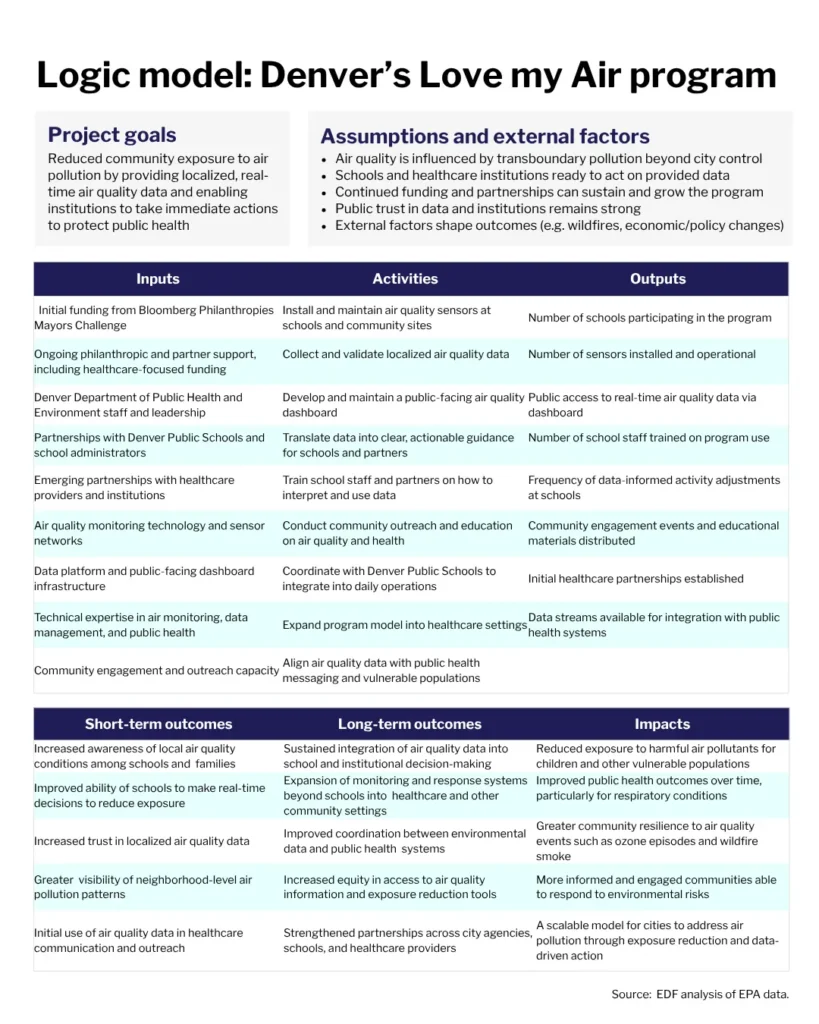
At its core, Love My Air connects real time air quality monitoring with simple, actionable guidance. The program began by installing sensors at selected schools across Denver to measure pollutants such as fine particulate matter. These sensors provide near real time data that reflects neighborhood level conditions, addressing a key limitation of traditional regulatory monitoring, which often cannot capture localized variation.
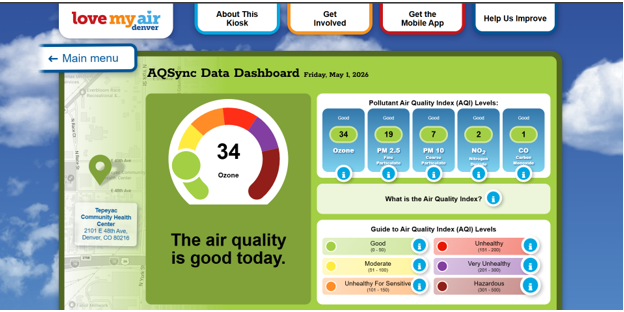
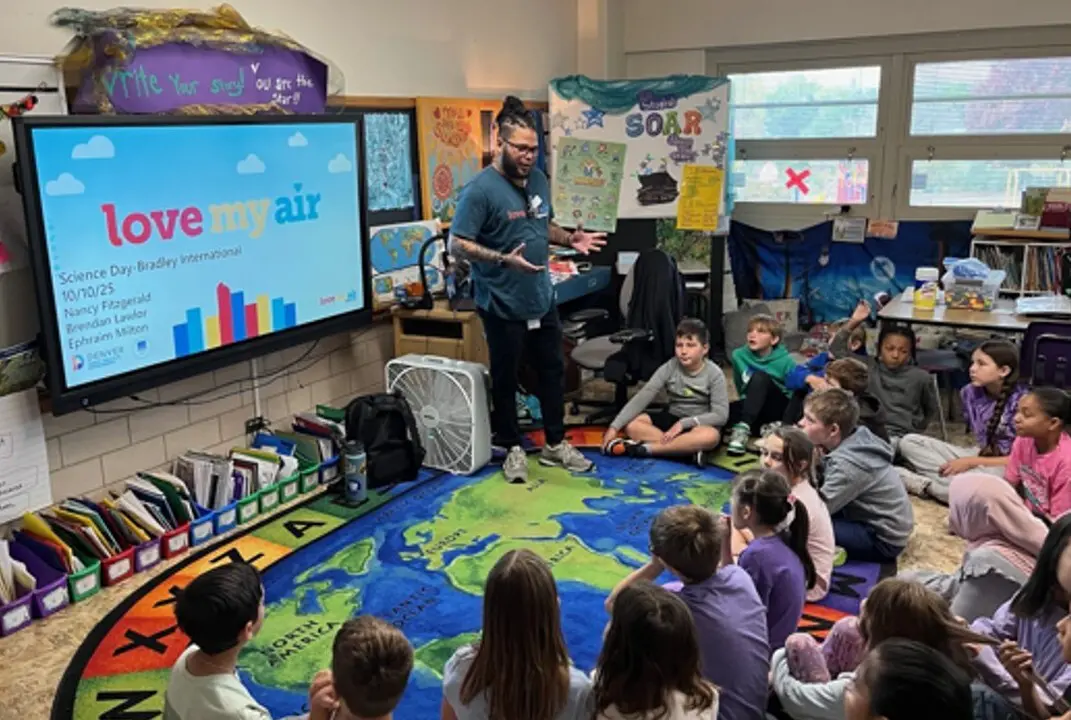
The data is shared through a public facing dashboard that allows school staff, families, and community members to understand current conditions. The program then translates that data into clear recommendations. Schools can adjust outdoor activities, modify recess schedules, or move programming indoors during periods of elevated pollution. This focus on practical decision making has been central to the program’s design.
Participation in Love My Air is voluntary. Schools choose to participate and integrate the data into daily operations. Instead of relying on enforcement, the program emphasizes accessibility, ease of use, and value to participants. The primary incentive is the ability to better protect student health and make informed decisions throughout the day. Initial funding from the Bloomberg Philanthropies Mayors Challenge supported early deployment, while ongoing partnerships have helped sustain and expand the program.
The program was initially implemented at a targeted set of schools, with a focus on communities experiencing higher pollution burdens. Over time, the geographic footprint expanded as additional partners became involved. Denver Public Schools has taken on an increasing role in supporting and sustaining school-based implementation, helping integrate the program into existing operations and communication channels.
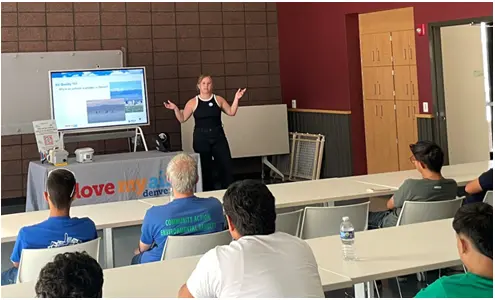
Love My Air operates within the city’s authority but depends on collaboration. The program was developed through coordination between the Denver Department of Public Health and Environment, school leadership, community organizations, and technical partners. This structure allowed the city to move quickly while maintaining credibility and trust. Public communication has been central from the beginning, supported through school networks, community outreach, and an accessible dashboard.
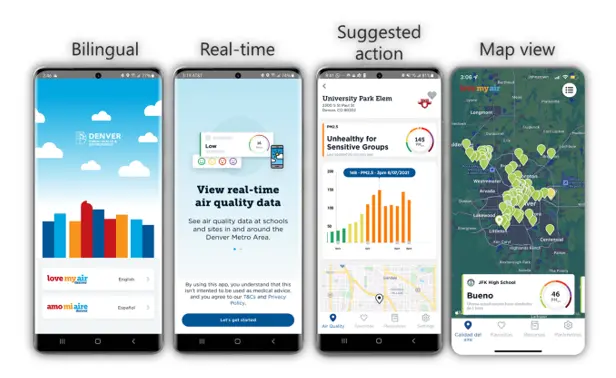
By making air quality data visible and understandable, Love My Air has helped shift awareness from abstract regional conditions to tangible, local experiences. As the program has matured, the model now extends beyond schools into healthcare settings, where providers use localized air quality information to better protect vulnerable patients and inform care and communication. This evolution reflects a broader strategy of using data and partnerships to reduce exposure across the community.
Overcoming barriers
As with many new city initiatives, the path from concept to implementation for Love My Air was not straightforward. The program required Denver to operate in a space that was relatively new for local governments, combining emerging monitoring technologies with public health guidance and community engagement.
One of the earliest challenges was the availability and reliability of localized air quality data. While regulatory monitors provide highly accurate measurements, they are not designed to capture variation at the neighborhood or school level. Introducing lower cost sensors raised questions about data quality, calibration, and interpretation. The city needed to ensure the data was credible enough to inform decisions while remaining accessible to non- technical users.
Technical capacity was another barrier. Building a system to collect, process, and display real time data required coordination across technical experts, platform providers, and public health staff. This type of cross- functional work was not a traditional role for many city agencies.
Community trust and buy- in were also critical. Air quality can be a sensitive issue, particularly in communities facing disproportionate environmental burdens. The city needed to communicate clearly what the data could and could not show, and to position the program as a practical tool rather than a source of concern without solutions.
Financial constraints shaped the early stages of the program. Initial funding from the Bloomberg Philanthropies Mayors Challenge was essential for piloting the concept and demonstrating value. Without that early investment, it would have been difficult to test the model and build partnerships for expansion.
Several factors helped the program move forward. Strong leadership and a clear public health focus aligned stakeholders around a shared goal. Framing the program as a practical tool for schools and families, rather than a regulatory effort, made it easier to build support. Partnerships with schools, community organizations, and technical experts were equally important, providing both credibility and a direct connection to families.
Starting small and iterating also proved critical. Piloting the program in a limited number of schools allowed the city to test technology, refine messaging, and understand how users interacted with the data before expanding.
Several core assets supported success throughout the process. Flexible funding enabled adaptation. Technical expertise supported the monitoring network and data systems. Existing relationships with schools and community partners provided a foundation for implementation. A willingness to approach air quality from a new angle, focused on exposure reduction and community level action, helped differentiate the effort.
These lessons continue to shape the program as it evolves. As Love My Air expands into new settings, including healthcare, the same combination of data, trust, and collaboration remains central to its approach.
Key takeaways
Observed outcomes and impacts
- Expanded access to localized air quality data at the neighborhood level, particularly in and around schools
- Increased awareness among students, families, and school staff about day to day air quality conditions
- More informed decision making at schools, including adjustments to outdoor activities during periods of elevated pollution
- Strengthened partnerships between city agencies, schools, and community organizations
- Increased visibility of air pollution disparities across neighborhoods, helping inform more equitable public health strategies
- Early expansion of the model into healthcare settings, where localized air quality data can support vulnerable populations and inform care and communication
Lessons learned and best practices
- Start with exposure, not just emissions: Cities may not control all pollution sources, but they can take meaningful steps to reduce exposure and protect public health.
- Pair data with action: Monitoring is most effective when it leads to clear, practical decisions by institutions such as schools or healthcare providers.
- Work through trusted institutions: Schools provided a strong initial platform, and healthcare facilities represent a natural next step given their role in serving sensitive populations.
- Design for adaptability: Programs that are built with flexible infrastructure can expand from one setting, such as schools, into others, including healthcare systems.
- Invest in communication and transparency: Public dashboards and clear messaging help build trust and ensure the data is accessible to non technical audiences.
- Pilot and iterate: Starting with a limited deployment allows cities to refine both the technology and the user experience before scaling.
- Build cross functional partnerships early: Public health agencies, school systems, healthcare providers, and community organizations all play complementary roles in successful implementation.
Recommendations for cities considering similar approaches
- Begin with locations where exposure reduction can have immediate impact, such as schools, and plan early for expansion into other community settings
- Consider healthcare facilities as a next phase, particularly for reaching populations that are more vulnerable to air pollution
- Align air quality data efforts with public health systems to support more integrated responses
- Invest in data quality and usability to ensure information is trusted and actionable across different types of institutions
- Identify long term partners, such as school districts or health systems, that can sustain and scale the program over time
- Seek flexible funding sources that support both pilot implementation and future expansion into new sectors
Implementation stage and future directions
Denver’s Love My Air program can be considered in a mid to later stage of implementation, with core systems established and ongoing efforts focused on sustainability and expansion.
Key next steps include:
- Transitioning long term ownership of school based components to partners such as Denver Public Schools
- Expanding the model into healthcare settings, with support from partners such as the Kaiser Family Foundation, to better serve vulnerable populations
- Strengthening connections between air quality data and health outcomes, including opportunities to inform clinical guidance and community health messaging
- Exploring how localized monitoring can support broader public health and resilience strategies across the city