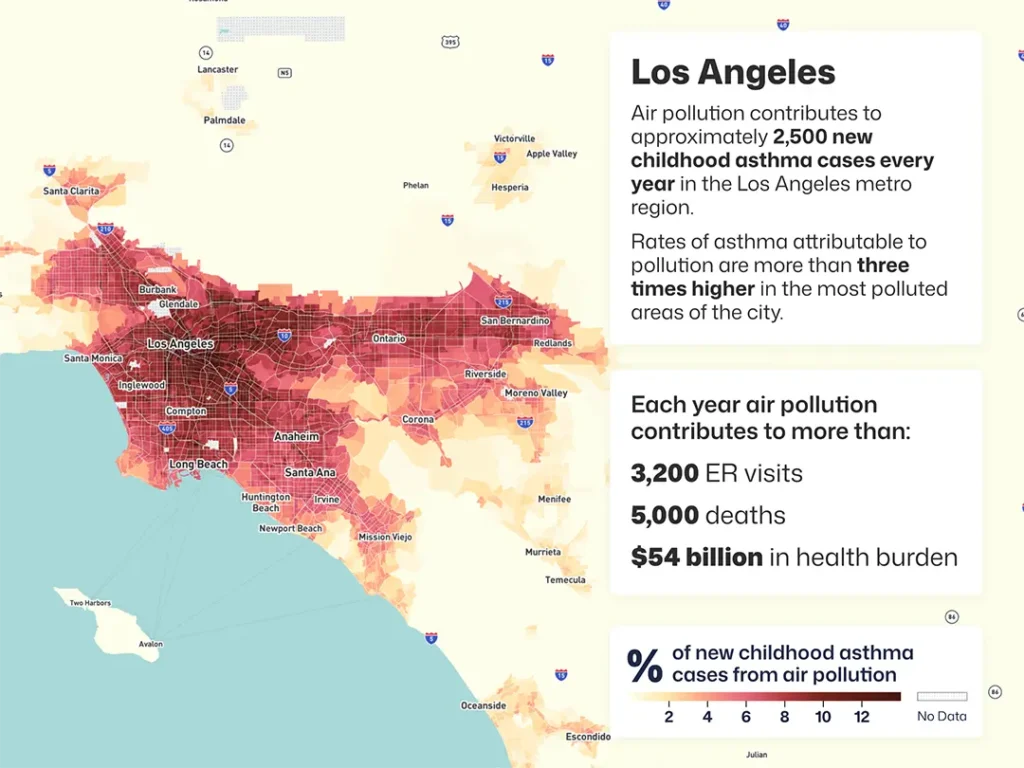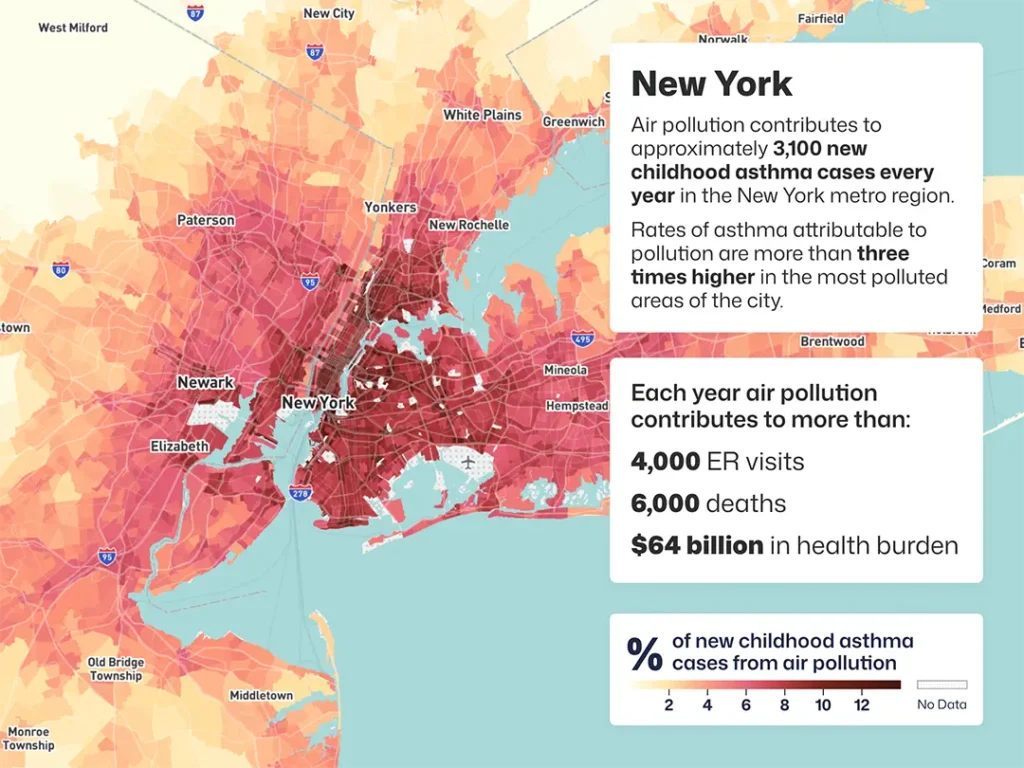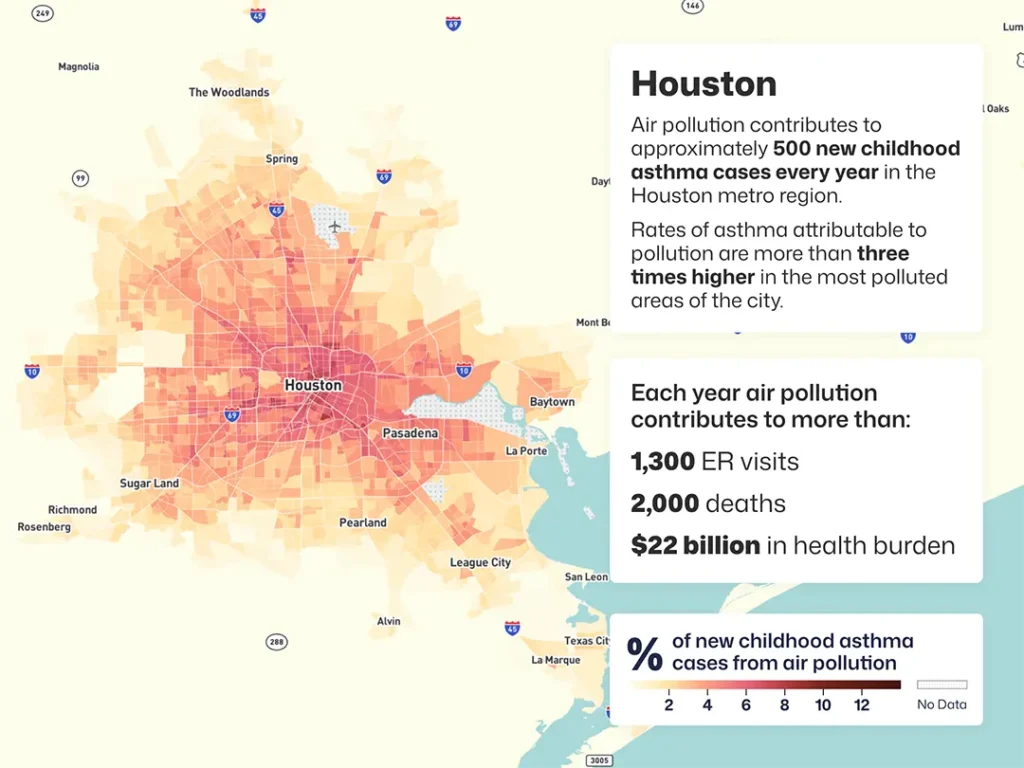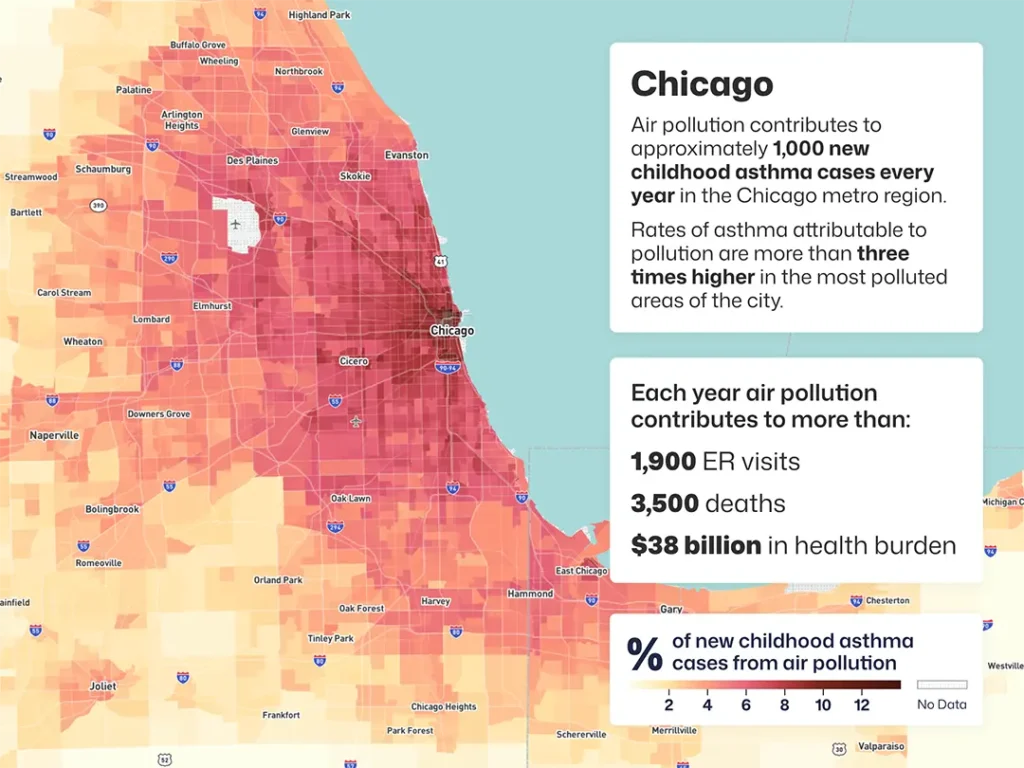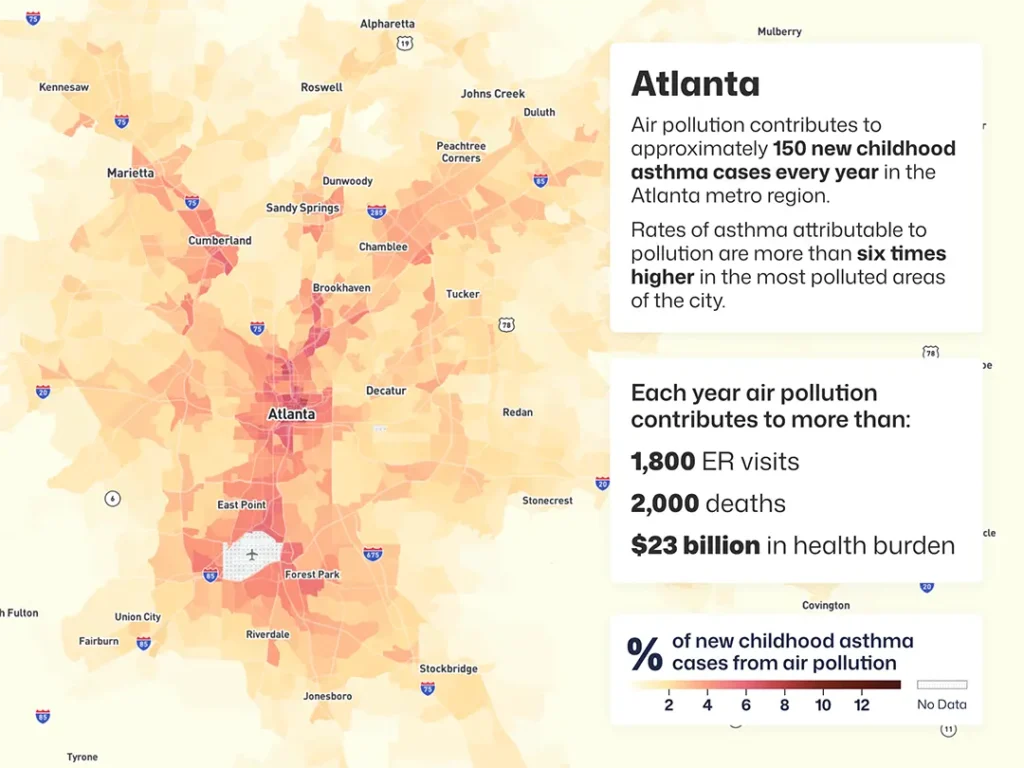

Across the United States, air pollution contributes to more than 15,000 new childhood asthma cases, 50,000 emergency room visits and 100,000 deaths every year. It carries enormous economic costs, too — more than $1 trillion every year or 5% of GDP. The health and economic effects of pollution vary across cities depending on factors like location, local pollution sources, weather, demographic patterns and state and local policies.
Air pollution’s health harms fall harder on some groups than others. Children, seniors and pregnant women are among the most vulnerable, as well as lower-income and black and brown communities. One study found air pollution-linked childhood asthma cases were 7.5 times higher for U.S. communities of color than for mostly white communities. Focusing policies on most affected groups is crucial to correcting a legacy of unfair treatment and maximizing health benefits.
While the impacts of air pollution are distributed differently in every city, understanding who is most affected and how is key to raising local awareness and making a strong case for policy action.
See how air pollution’s health impacts vary between and within cities
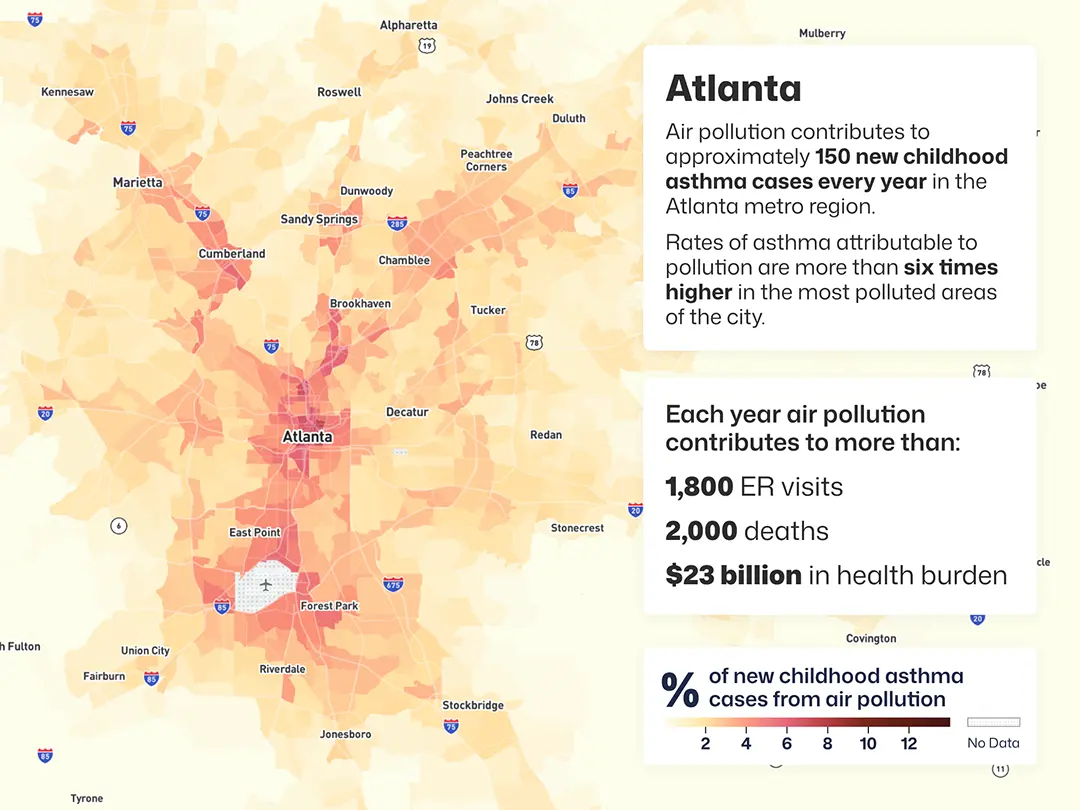
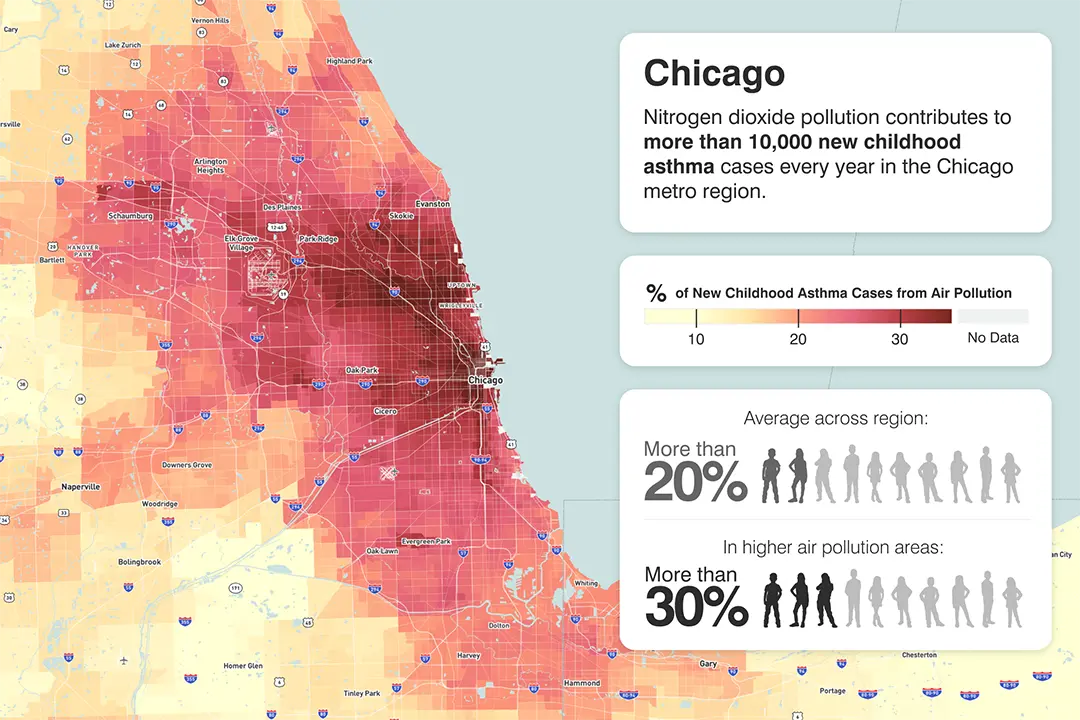
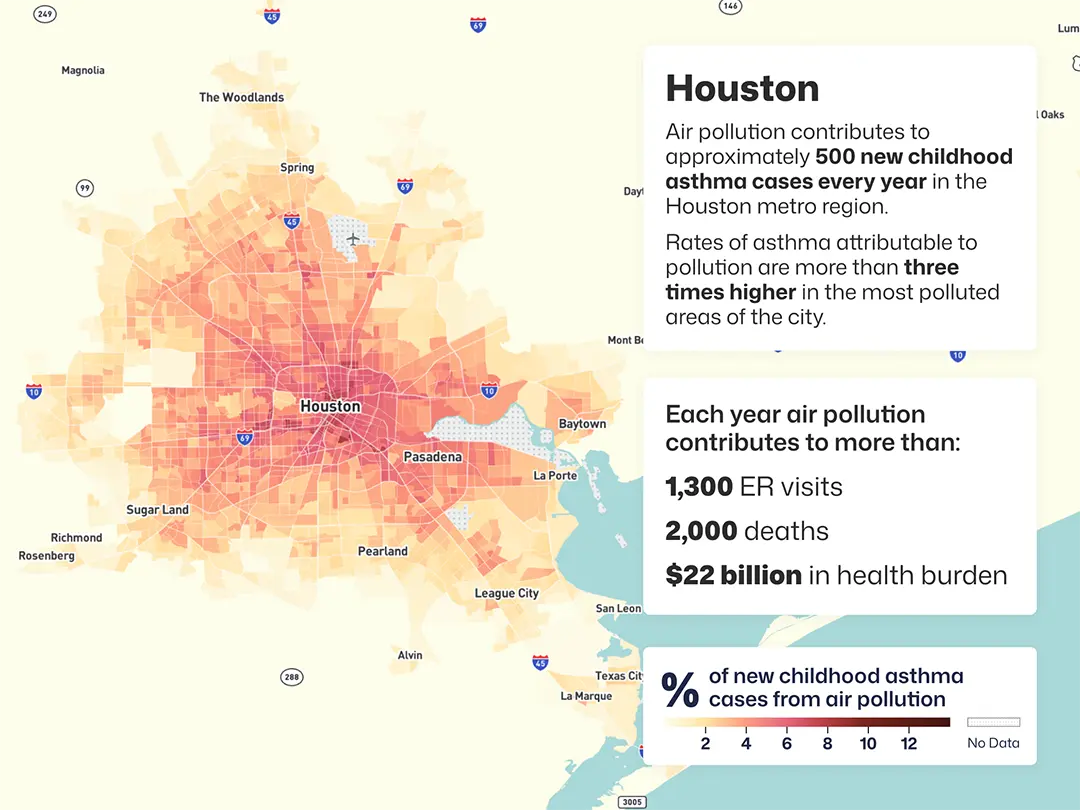
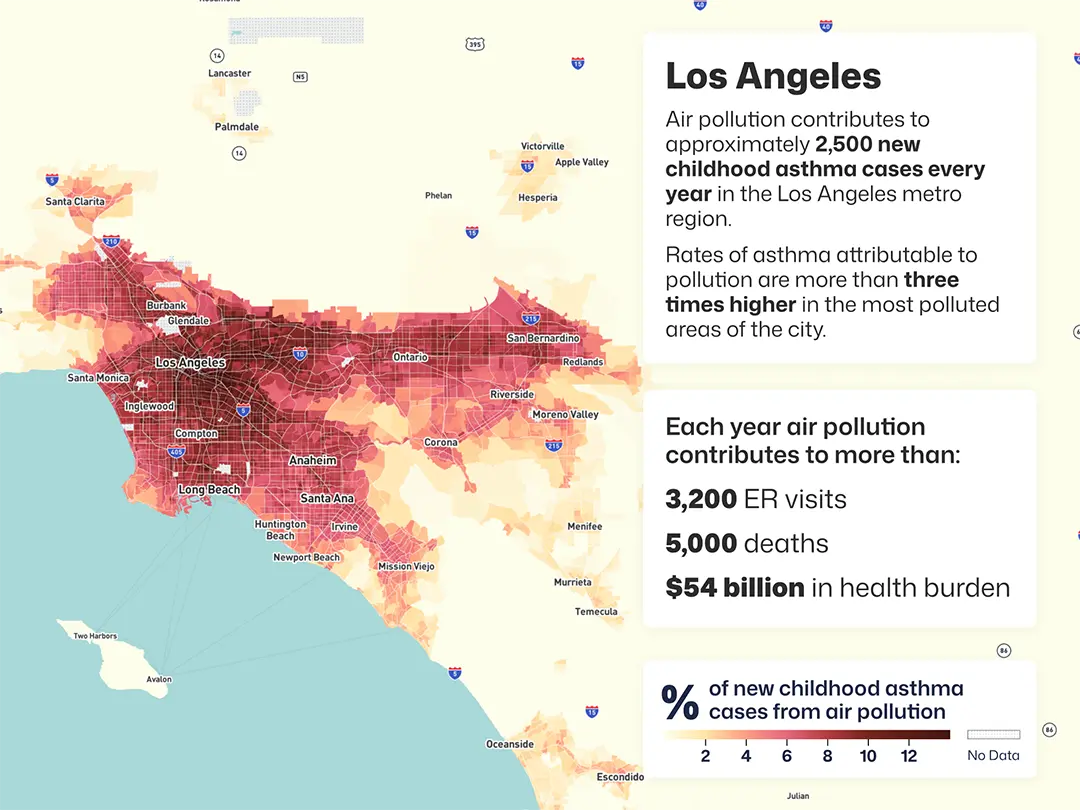
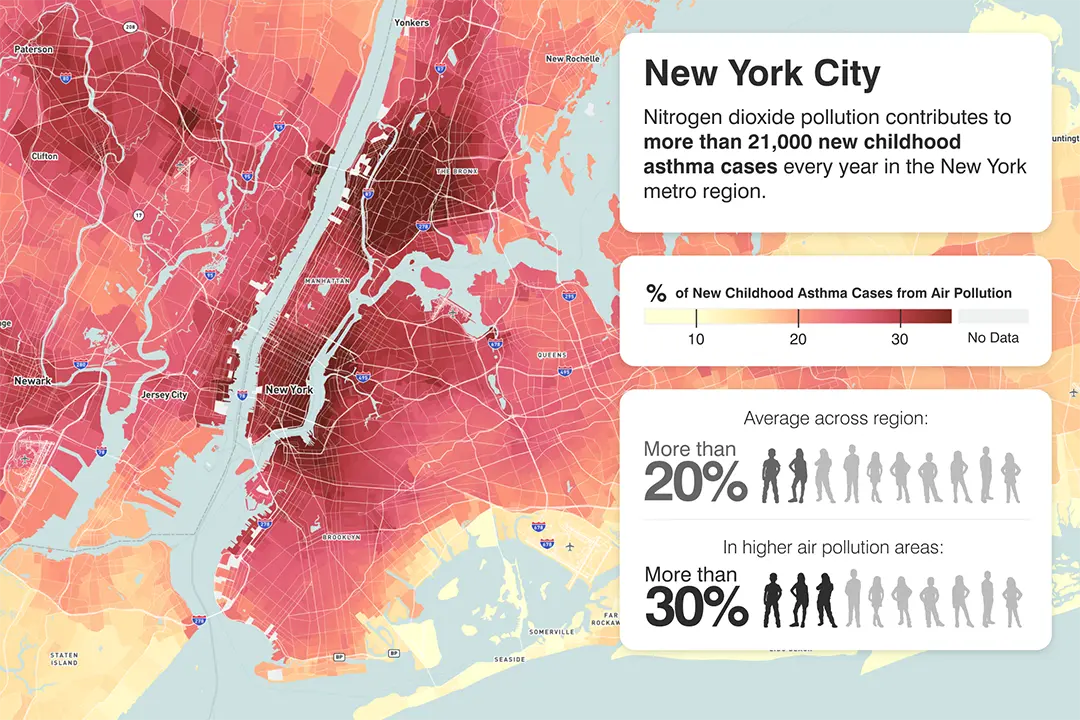
Enter your location below to learn more about air pollution’s health impacts in your city
This tool can help your city get a clearer picture of where the health and economic burdens of air pollution fall. Use it to generate a city-specific report on local harms, including childhood asthma cases, emergency room visits and early deaths.
For more on the methodology behind these maps and statistics, click here.