Learn the basics of what’s in your air, how air pollution threatens public health and what cities can do.
What is air pollution and where does it come from?
Most urban air pollution comes from burning fossil fuels — like emissions from cars, trucks, buildings and industrial sites. One of the most harmful pollutants, fine particles known as PM2.5, can get deep into the lungs and cause heart attacks, strokes, asthma and early death.
Burning of fossil fuels also emits nitrogen oxides (NOx), which can cause and worsen asthma and increase the risk of heart disease. NOx also helps form another common pollutant, ground-level ozone — a key ingredient in smog — which can irritate the chest and throat in the short term and damage lung function over time.
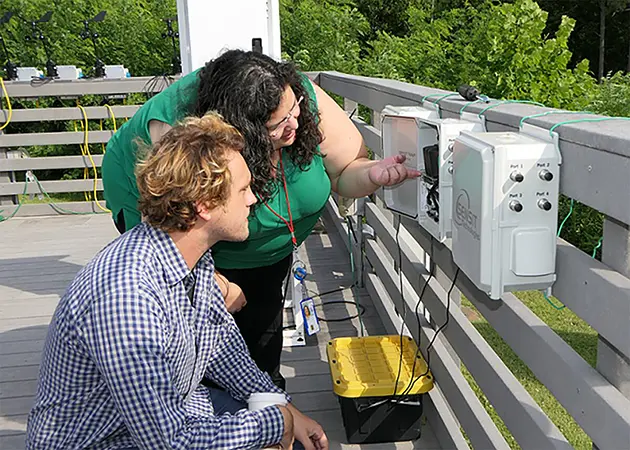
While PM2.5, NOx and ground-level ozone are among the most common pollution culprits, they are far from the only ones your city will encounter. For example, industrial facilities can release a wide range of hazardous pollutants, depending on what they produce. Our resource library is full of data tools that can help capture your city’s unique air pollution profile.
How does air pollution impact health in cities?
Nearly half of the U.S. population lives with unhealthy levels of air pollution. Across the United States, air pollution contributes to more than 15,000 new childhood asthma cases, 50,000 emergency room visits and 100,000 deaths every year.
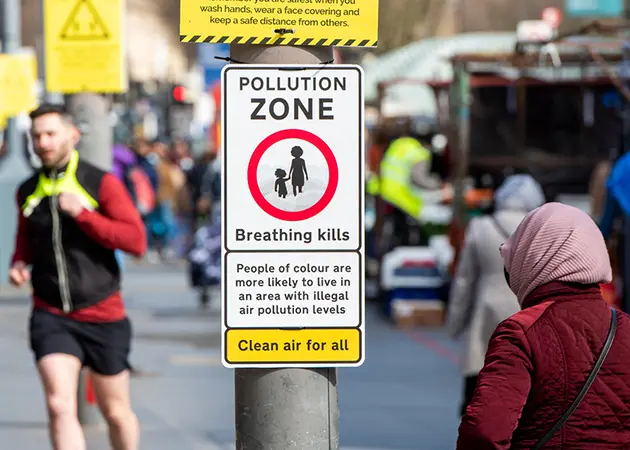
The impacts of air pollution vary across the United States and even within cities. The health burden of air pollution is not shared equally. Black and brown communities are more likely to breathe unhealthy air. They’re also more likely to suffer from one or more chronic conditions that make them more vulnerable to air pollution, such as asthma, diabetes and heart disease. Children, seniors and pregnant women are also among the most susceptible to harm from poor air quality.
Climate change impacts such as extreme heat, drought and wildfires are making air pollution worse — especially ozone and PM2.5.
Illness and early death from air pollution create enormous costs to society. These include higher healthcare spending, lost income and productivity and financial strain on families. Again, lower-income and black and brown communities bear more than their fair share of these costs.
What can cities do about it?
The good news is solutions exist and cities across the United States and the world are successfully using them to reduce air pollution. The City Clean Air Hub draws on lessons learned by dozens of cities and their most trusted datasets and tools to help your city or town chart its own path to cleaner air.
To get started, check out our three-step guide and visit our full resource library below.