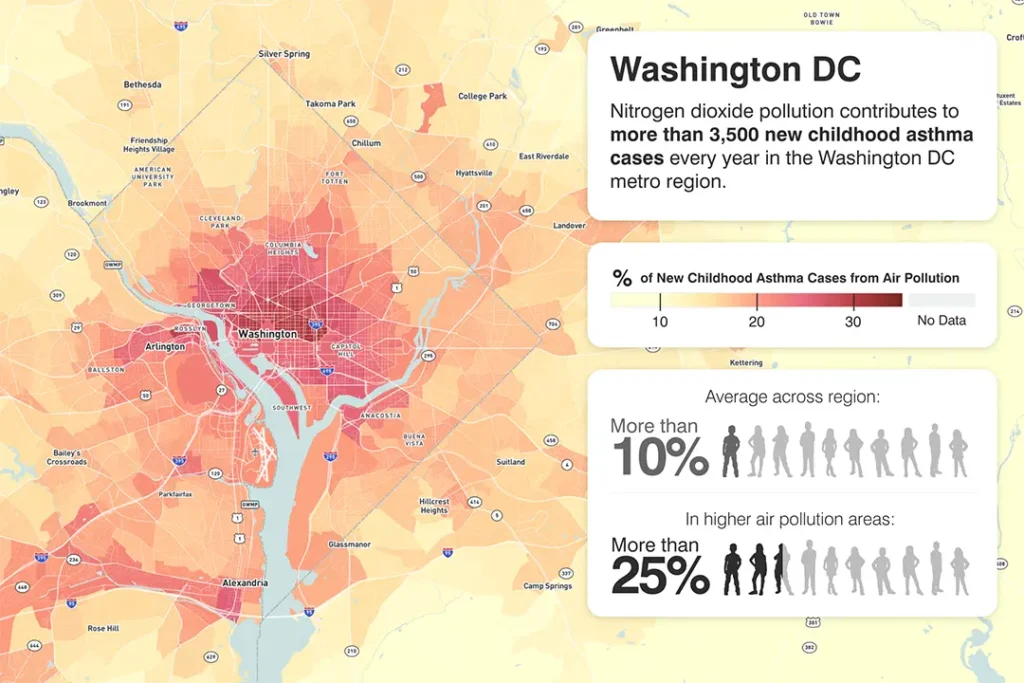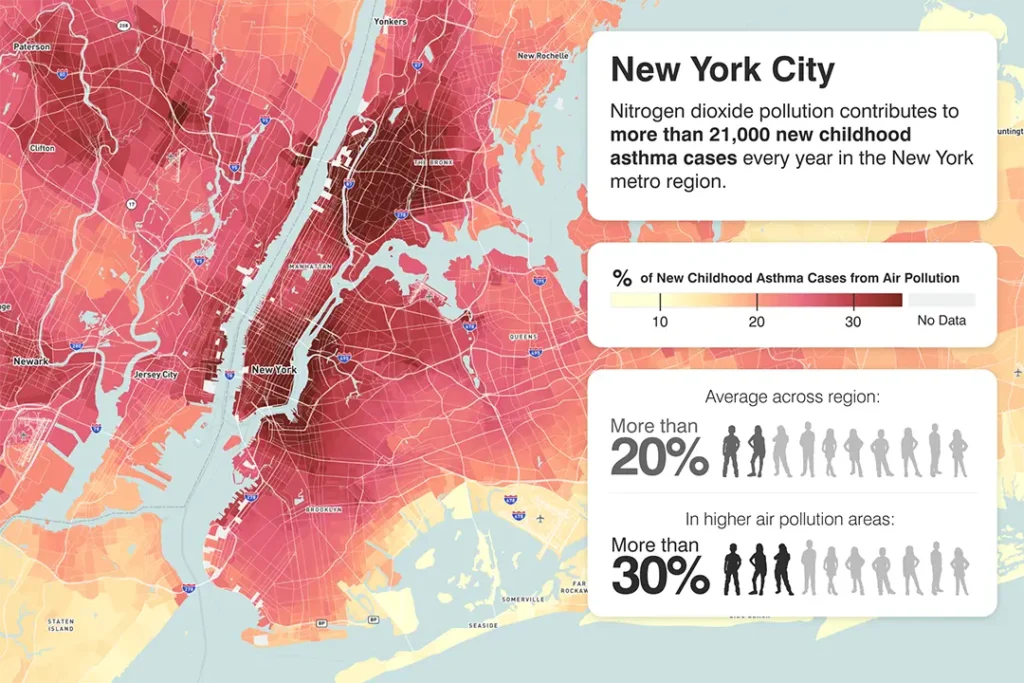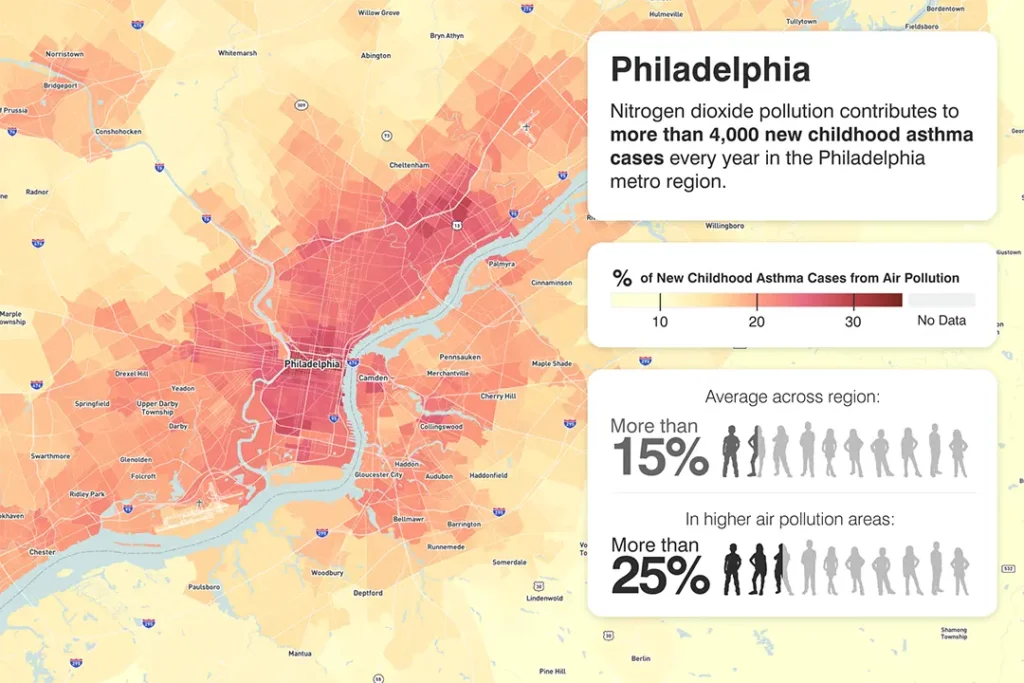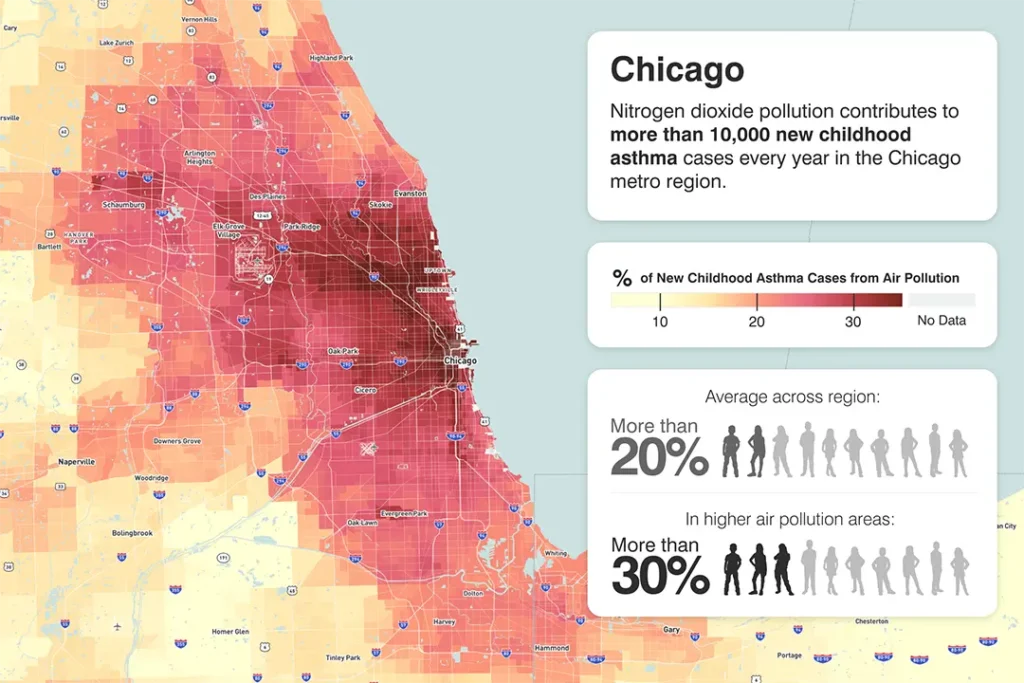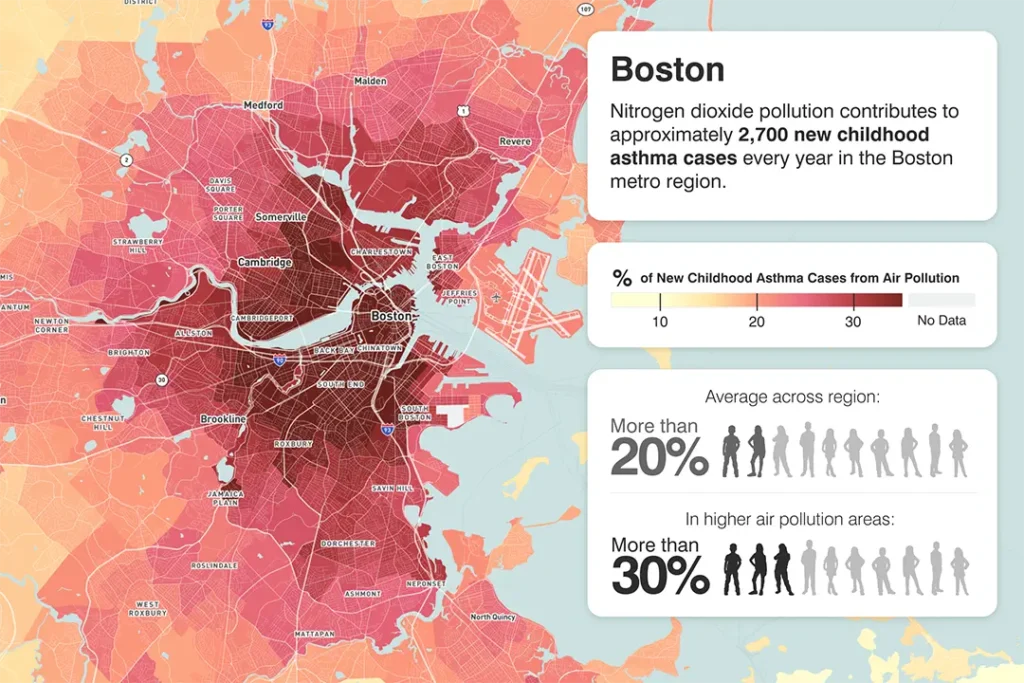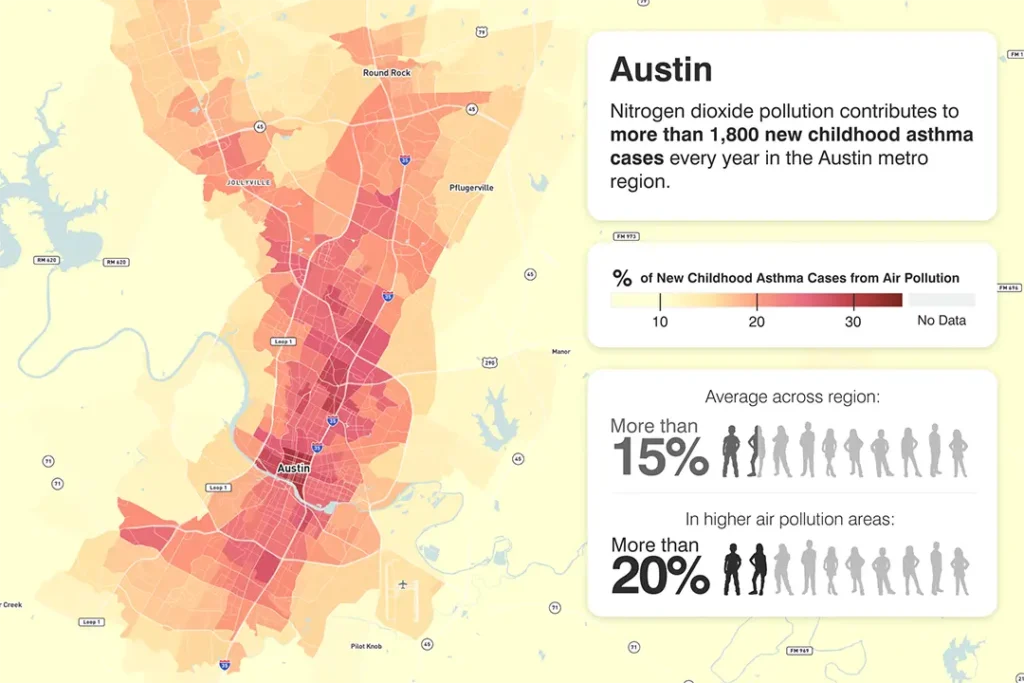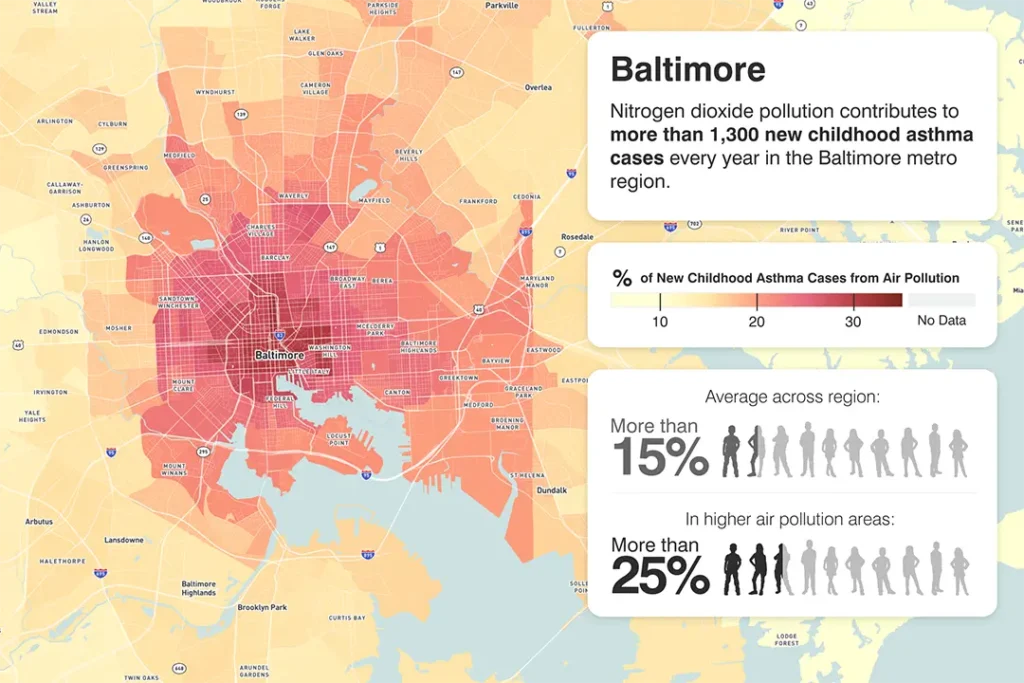

Cutting emissions is essential, but cities also need to protect their people from air pollution’s worst health impacts, even as they work to reduce them. This section highlights resources that will help your city build a localized strategy for reducing exposures to safeguard community health, particularly during events like wildfires, periods of extreme heat and high ozone episodes.
Children, older adults, low‑income communities and black and brown communities often face higher pollution levels because they live closer to major sources and have access to fewer protections. Individuals with certain medical conditions can also be more susceptible to negative health impacts driven by exposure to air pollution. This section also provides case studies and analytical tools to help cities choose strategies that prioritize these most affected groups.