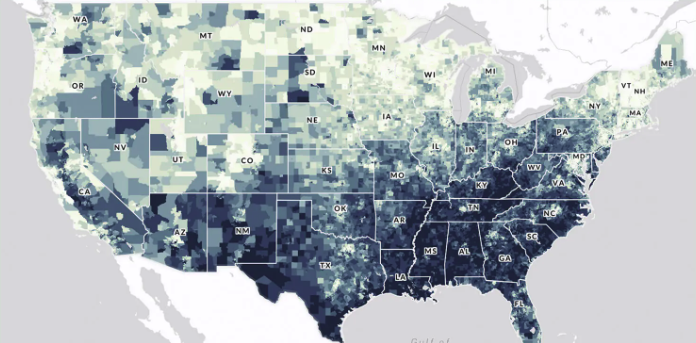
The U.S. Climate Vulnerability Index map is an interactive tool that ranks more than 70,000 U.S. census tracts using 184 indicators to show which communities face the greatest challenges from climate change. It visualizes “overall climate vulnerability” as well as underlying drivers in domains such as health, social and economic conditions, environment, infrastructure, and climate impacts (e.g., extreme events and climate disaster costs). Users can search for any location, compare tracts within a state or EPA region, and drill down to see which specific factors—like housing quality, exposure to pollution, or health burdens—are contributing to vulnerability, helping communities and decision‑makers target climate resilience investments where they are needed most.
The ARL site is a scientific research and modeling portal. Its mission is to improve the Nation’s ability to protect human and ecosystem health by studying the physical and chemical processes occurring from the soil up to about 2–3 miles in the atmosphere. It is the birthplace of the HYSPLIT model, the global standard for tracking the movement of air parcels.
The AQUA tool is an easy-to-use excel spreadsheet model that city staff can use with minimal guidance. It uses population, exposure, health and economic cost data, as well as epidemiologic evidence to help users calculate how emission changes can benefit local air quality and health.
This page provides resources for measuring transportation greenhouse gas emissions and air quality impacts, and incorporating climate adaptation and resilience features as they relate to a proposed project.
The EDF Turbine Map is an advocacy-focused geospatial tool developed by the Environmental Defense Fund (EDF) in partnership with Moms Clean Air Force and EcoMadres. It is designed to expose the environmental and health impacts of gas-fired combustion turbines across the United States.
Mapping tool that provides information on criteria pollutant and GHG emissions from Title V permitted sources in New Mexico. Data is provided in map form or in tables and charts. Data can be filtered and downloaded as a CSV file.
CASTNET is a national monitoring network established to assess trends in pollutant concentrations, atmospheric deposition, and ecological effects due to changes in air pollutant emissions.
This resource provides access to data from the EPA Toxics Release Inventory, which provide self reported information on toxic chemical releases and pollution prevention activities from industrial and federal facilities. There are several types of information provided by the resource, including tools for tracking releases over time, exploring individual facility releases, summaries across sectors and locations, health impacts from TRI releases, and databases of chemical releases.
Subscribe
Sign up to get the latest updates on new city clean air tools and resources.