Mapping tool providing information on overburdened communities in New Jersey, as well as information on environmental and public health stressors, and locations of emitting facilities, along with information about violations and incidents.
Mapping tool providing locations of facilities with air permits in NJ, along with information on air quality, weather, wind speed and direction, and overburdened communities.
Web tool providing information on neighborhood built environment, asthma, climate, housing, and outdoor air, intended to show how environments affect health.
MiEJScreen is a screening tool that provided percentile scoring various environmental, health and socioeconomic indicators to measure relative environmental risk in communities. This map is meant for general information about Environmental Justice in Michigan and is a collection of basic data sets related to Environmental Justice concerns which allow users to identify, query, and filter the data.
CalEnviroScreen, developed by California’s Office of Environmental Health Hazard Assessment (OEHHA), is a screening tool that scores and ranks census tracts across the state based on cumulative pollution burdens and population vulnerabilities. It combines data on pollution sources and exposures (air pollution, hazardous sites, traffic, drinking water, etc.) with sensitive population and socioeconomic indicators (e.g., asthma ER visits, cardiovascular disease, poverty, linguistic isolation) to identify communities that are disproportionately burdened by multiple environmental and social stressors.
The DEQ North Carolina Community Mapping System is an online, interactive mapping platform that brings together environmental, health, demographic, and infrastructure data to help communities understand local conditions and support environmental justice and planning efforts. Through a web map interface, users can explore layers related to air and water quality, regulated facilities, climate and flooding risks, sensitive receptors (like schools), and community characteristics, allowing residents, advocates, and decision?makers to identify overburdened areas, visualize cumulative impacts, and inform permitting, enforcement, and investment decisions.
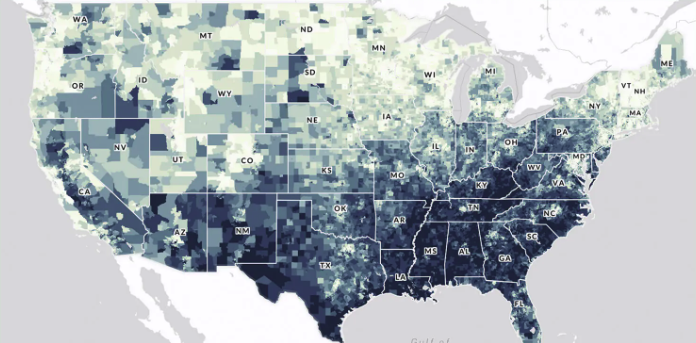
The U.S. Climate Vulnerability Index map is an interactive tool that ranks more than 70,000 U.S. census tracts using 184 indicators to show which communities face the greatest challenges from climate change. It visualizes “overall climate vulnerability” as well as underlying drivers in domains such as health, social and economic conditions, environment, infrastructure, and climate impacts (e.g., extreme events and climate disaster costs). Users can search for any location, compare tracts within a state or EPA region, and drill down to see which specific factors—like housing quality, exposure to pollution, or health burdens—are contributing to vulnerability, helping communities and decision‑makers target climate resilience investments where they are needed most.
This page provides resources for measuring transportation greenhouse gas emissions and air quality impacts, and incorporating climate adaptation and resilience features as they relate to a proposed project.