High-resolution, map-based decision-support tool launched in Fall 2023. It was co-developed by the non-profit American Forests alongside a council of local stakeholders, including city governments, state agencies, and community advocates.
This is a comprehensive tool that allows users to query, locate, and view GHG, criteria, and air toxics emissions. The tool includes maps, charts, and tables, and allows for visualization of trends over time. The tool allows users to display community vulnerability data. Maps and data are downloadable.
Founded in 2018, through the Bloomberg Mayors Challenge, the city of Denver created Love My Air. Love My Air is a citywide monitoring network to provide real-time air quality data utilizing cutting-edge air pollution technology. Through collaboration with many community organizations and partners, Love My Air provides workshops, trainings, and outreach connecting health to air quality.
Mapping tool that provides access to a wide array of information related to air quality management, including permits, air quality monitoring, community vulnerability, public engagement, and enforcement actions.
This open collection is designed to support and enhance global research initiatives focused on understanding and mitigating the health impacts of environmental exposures.
Mapping tool that provides information on permitted facilities in New Jersey. The tool provides information on the reported emissions for each major and minor source, as well as current information on PM and ozone monitored air quality, and community vulnerability information.
The Louisiana Tumor Registry website presents information about Louisiana’s statewide, population-based cancer registry, which collects detailed data on cancer cases to support prevention, early detection, treatment, and survivorship efforts. It offers resources for cancer registrars and providers on reporting requirements, and for data users—such as public health professionals, clinicians, planners, and researchers—through statistics, interactive data visualizations, cancer maps, monographs, and one-page summaries. The site also describes the Registry’s role in national programs (SEER and CDC’s NPCR), its research infrastructure (including rapid case ascertainment), and how its high-quality data are used to guide cancer control policies and reduce cancer burden and disparities in Louisiana.
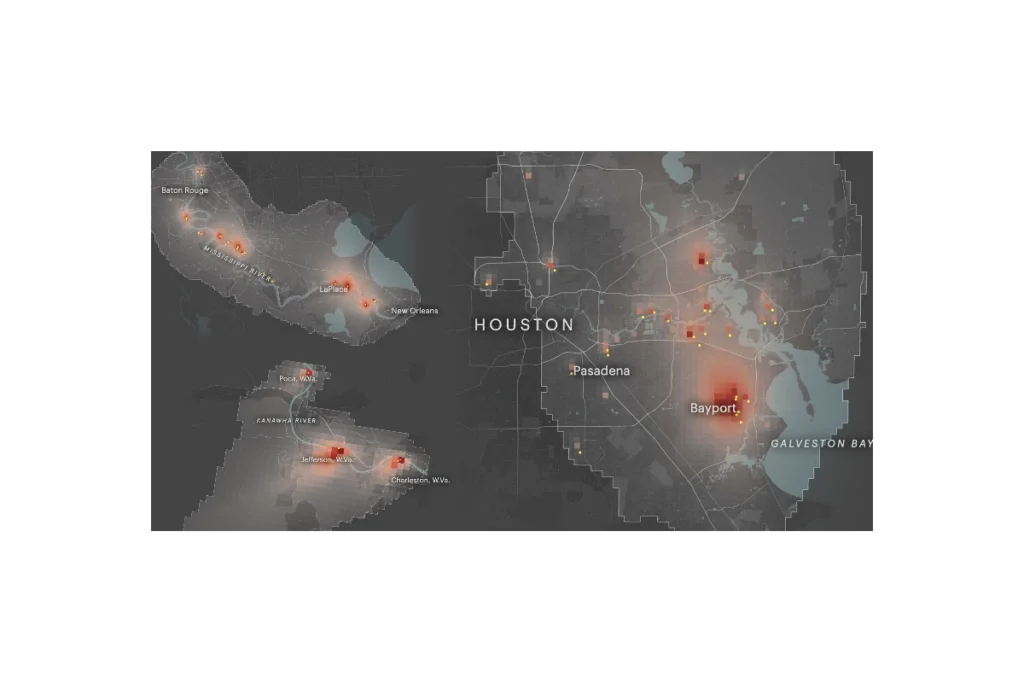
ProPublica’s Toxmap is an interactive map that visualizes estimated cancer risk from industrial air pollution across the United States. Built from EPA emissions and modeling data, it shows how toxic chemicals from thousands of facilities spread into surrounding neighborhoods, highlighting hotspots where cumulative industrial air pollution may raise cancer risk to levels the government considers unacceptable. The site lets users zoom to specific communities, see which facilities are driving risk, and explore patterns of environmental injustice in overburdened areas.
Subscribe
Sign up to get the latest updates on new city clean air tools and resources.